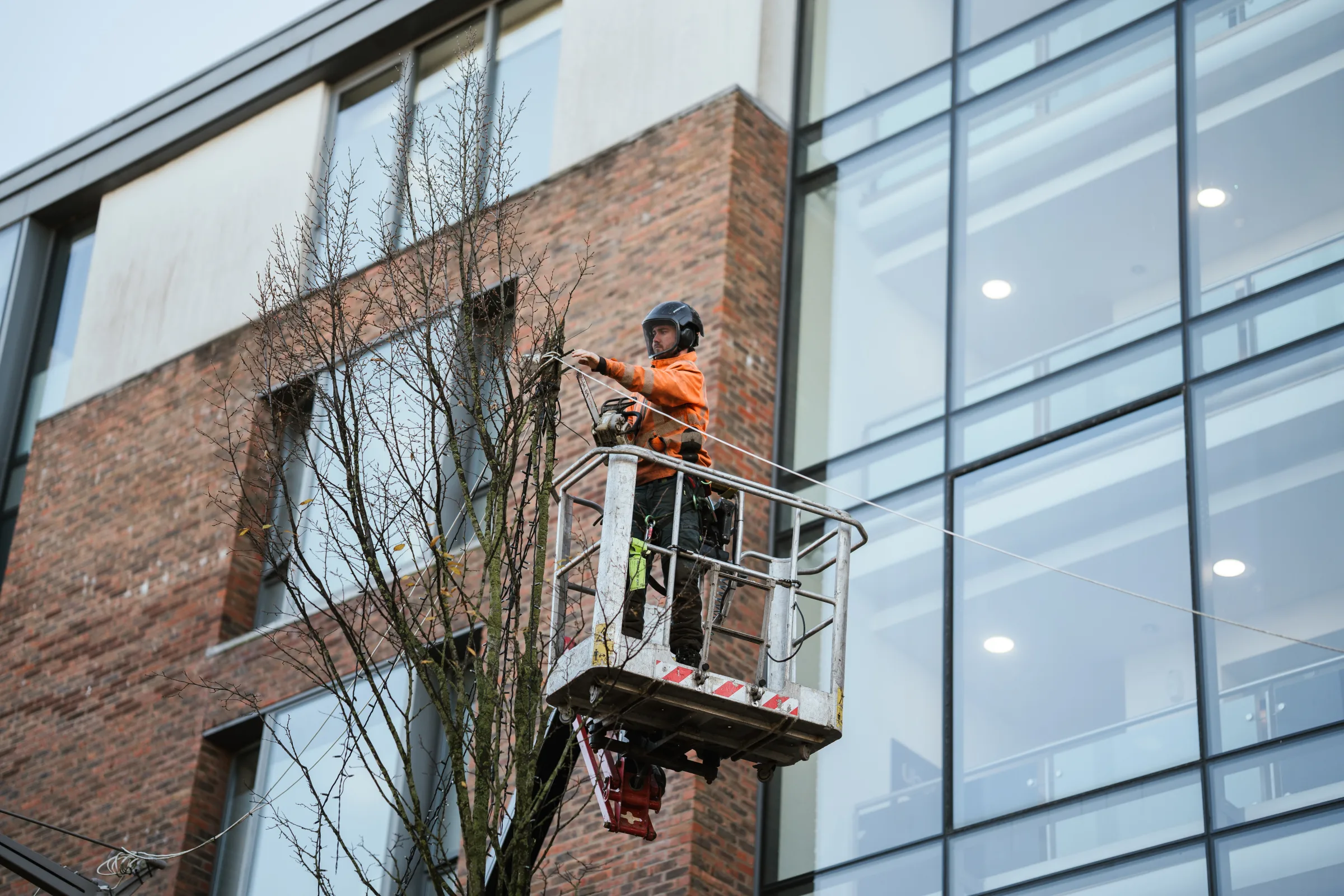
Overhanging the roof, shading the garden or simply too big — a problem tree doesn’t always have to be cut down. Here’s what each of the main options involves, and when it’s the right choice.
Thinning the crown
Crown thinning removes some of the smaller branches evenly throughout the canopy. The tree stays the same size and shape, but more light reaches the ground and the crown catches less wind. It’s a good fit for trees that make a garden feel dark.
Reducing the crown
A crown reduction cuts branches back to suitable points all round, making the tree lower and narrower while keeping its natural form. It’s often the best answer when a tree has simply got too big for where it is.
Lifting the crown
Crown lifting removes the lower branches to give clearance over a lawn, path, drive or road, without affecting the upper part of the tree.
Removing deadwood
Cutting out dead, dying and damaged branches makes a tree safer and better looking, and is often combined with other pruning.
Taking the tree down
Felling is the right call when a tree is dead, dangerous, badly diseased, damaging a building or simply in the wrong place. Near houses, it’s usually dismantled in sections.
Why topping is a bad idea
Topping — cutting off the top of a tree without regard to its structure — damages it and produces fast, poorly attached regrowth. The tree is usually more of a problem within a few years.
Get a professional opinion
Book a free site visit and one of our arborists will look at the tree with you, explain the options and give you a clear quotation for each.